Osteopathy for Babies, Children and Families


What is Paediatric Osteopathy?
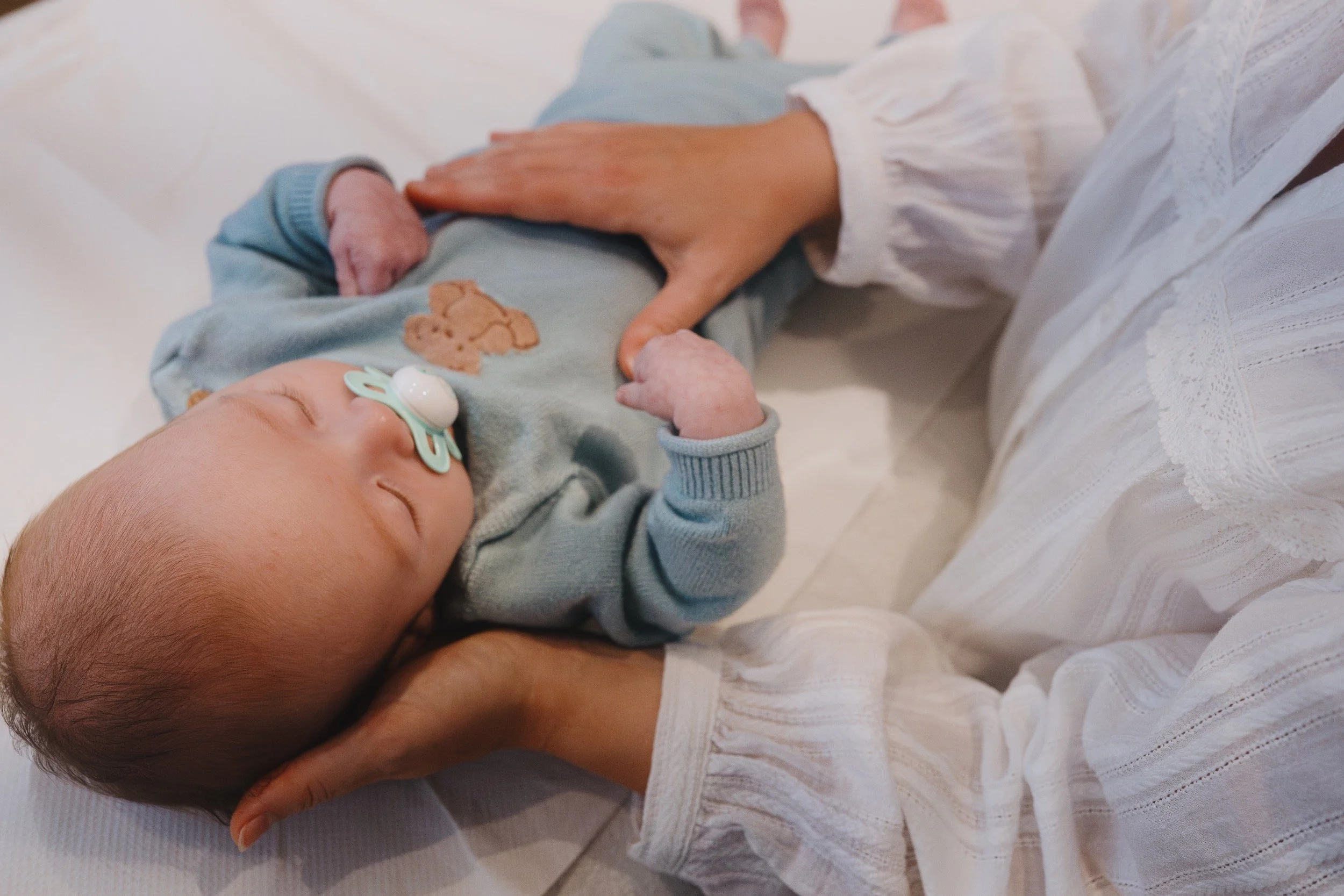
Paediatric Osteopathy is a specialist brand of Osteopathy that employs very gentle and safe techniques to treat babies, children and teenagers up to 18 years of age. These techniques when applied with specialist skill and medical knowledge aim to restore and support health and wellbeing during all stages of your child’s development.
Osteopathy is a holistic system of diagnosis and treatment, often favoured by parents for its non-invasive and non-pharmaceutical approach to treating various concerns in children and babies. Osteopathy varies from other healthcare disciplines because it combines anatomical knowledge with carefully refined palpatory skills to assess and diagnose a wide range of concerns and medical conditions.
In my practice I aim to understand and treat your child in the context of their life. By taking into consideration how they relate to and perceive the world around them I am able to provide care that is modified to address your child’s particular needs. By providing a nurturing and welcoming environment, my intention is that each baby and child feels safe to relax in order to receive the benefits that Osteopathic treatment can provide.
What to expect: your child’s first appointment
Your child’s first appointment will closely resemble the care and consideration that adults also receive at my practice. At the initial consultation I will take a detailed case history, led by the parent/s and guided by your child (if appropriate) to understand any concerns. We will ask questions about your child’s medical history including birth and your pregnancy, as this provides important information about your child’s first experiences of entering the world around us.
After listening carefully to your concerns I will provide a gentle assessment in order to give you some insight as to what I believe may be contributing to or causing your child’s symptoms. Ensuring that I have obtained consent from both you and your child (where appropriate) I will provide your child with gentle hands-on treatment and maybe give some exercises if they are old enough. Should it be that your child requires conventional medical care, alongside their Osteopathic care I will be able to guide or refer you to the appropriate healthcare professional.


What if my child is nervous of healthcare professionals or medical environments?
I understand that some children, either because of a previous bad experience or because they are gentle and sensitive may feel nervous about receiving Osteopathic treatment. They may worry that it could be similar to previous poor experiences of medical intervention and I do everything in my power to ensure that it is not.
Your child’s comfort is paramount to me, which is why in my practice I try not to make the treatment room overly ‘clinical’. I have lots of games, toys and books for children of all ages to play with and where possible will not dress in medical attire or have anatomical structures out for display.
If your child feels nervous about laying on the treatment couch, they can sit on it or on a chair, or provided you are comfortable with it; on your lap. For mums with young babies who may be hungry you are welcome to breastfeed your child as they can be treated at the same time that you do this. I am always happy to work around and accommodate any concerns that you or your child may have.
Benefits of Specialist Paediatric Osteopathy for Baby or Child
-

We treat your child as a unique individual and make our treatments personalised to their needs
-

We take a holistic view of your child’s wellbeing, meaning we consider all factors which could be impacting their health
-

Hands-on treatment and care that cannot be administered by other healthcare professionals
-

An opportunity to discuss and address any concerns with a qualified medical professional
My baby seems fine, why would they need Paediatric Osteopathy?
We always consider pregnancy and the experience of childbirth in terms of the mother - rightly so. However, we don’t stop to consider that your baby has gone through this childbirth too.
The change of environment and experience of childbirth for your baby may have been stressful, a little shocking perhaps and not particularly comfortable leading them to carry tension in their body. The express purpose of Paediatric Osteopathy for your baby is to help them adapt as they come to terms with their new surroundings in the world around them.
We can help with and treat:
Feeding and latching difficulties
Digestive issues (including colic and reflux)
Birth strains and tension
Head shape and position preferences (including plagiocephaly)
Sleeping difficulties (including nightmares)
Developmental milestones (including sitting up and crawling)
Postural and gait variations
Neurodiversity and additional needs

Why does my toddler need Paediatric Osteopathy?
As your toddler grows and matures, learning to crawl, walk, run and explore the world places new and different demands on their developing bodies.
Adapting to new strains and stresses of movement is necessary for your toddler to transition through every stage of development with ease. An osteopathic assessment can help to identify areas of muscular tension or restricted movement that could occur during these important developmental stages.
Gentle age-appropriate Osteopathic techniques can help support comfortable movement and general musculoskeletal wellbeing in your child as they grow.
We can help with and treat:
Postural development
Physical changes following falls and bumps
Co-ordination and balance difficulties
Movement restrictions
Muscular tension and tightness
Walking and gait patterns
Growing pains and discomfort

Why does my child need Paediatric Osteopathy?
Over just a few years children will undergo rapid development and change, these phases are crucial as they lay the foundation for a child’s long-term health and wellbeing.
The different aspects of your child's system; bones, muscle, joints, will not always grow in unison (they were not made to), which can lead to imbalances or the development of new symptoms. Osteopathy can help by monitoring these developmental milestones and gently direct them back to their normal physical blueprint. By taking the time to understand the reason behind your child’s discomfort, we can provide gentle relief in a calm and grounded environment.
We can help with and treat:
Growing pains or joint pains from active play
Easing recurrent digestive issues
Posture, balance or co-ordination difficulties
Muscle aches and pains that could arise from the neck, back, shoulder & arm or hips & lower legs
Tension headaches or jaw related concerns
Stress related to school or home-life difficulties
Recurrent aches with no obvious cause

Why does my teenager need to see an Osteopath?
Puberty is a time of huge physical and emotional change. Growth spurts and hormonal changes can have a direct impact on muscles, joints and ligaments and can even affect sleep.
Academic pressure alongside increased phone and screen use can cause tension, stress and worsened posture. During this time of growth the body can’t always keep up with the physical demands placed upon it. Osteopathic treatment aims to help your child’s body adapt so that they can grow with less pain and more function.
The demands that your teenager's body might be experiencing during puberty are often unique to that time of growth and development. Osteopathy can help because it is able to address a wide variety of concerns.
What we can help with and treat (though not exhaustive):
Neck, shoulder or back pain from carrying heavy bags or poor posture while studying
Managing sports related pains that may be related to growth and change
Tension headaches, migraines and jaw-related concerns
Specific joint pain, for example in the shoulder, hips or knees
Restricted mobility and poor posture
Manage chronic conditions or hypermobility disorders
Help to calm tense and worried, overly-anxious or hyper-active teenagers

Ostepathic treatment for post-natal recovery and care
Post-birth recovery is a very personal experience, which can often be neglected in light of caring for and enjoying the presence of your newborn.
While you may no longer be pregnant, your body will have had to adapt to a huge physiological change and recovery may not always look like you expect.
Aside from the changes that your body had to accommodate during pregnancy, the new physical demands of motherhood can be considerable and may include:
Strains from repeated lifting and carrying
Muscle tension from feeding and breastfeeding positions
Reduced pelvic floor function
Residual lower back or neck pain
Increased vagal tone and stress from a lack of sleep
I intend to listen to your concerns and understand how your body has adapted in order to provide you with care that supports you as you enter this new and wonderful phase of your life.

What to expect: pregnancy and post-natal care appointments
At your first appointment we would discuss your current healthcare concerns and proposed recovery goals.
I would take a thorough case history which includes details surrounding your pregnancy and birth, before performing a hands-on assessment of various joints, muscles and ligaments. I believe in taking the time to listen to my patients and their bodies so that I am able to provide the most effective and gentle care possible.
Alongside Osteopathic treatment I may provide you with specific exercises to try or tailored lifestyle advice to help aid your recovery and wellbeing.
Where necessary I sometimes advise mums to come in and have a joint treatment with their baby. This can be particularly helpful where a difficult pregnancy, birth or medical trauma has taken place.
Please note that these sessions are booked by appointment only.

Frequently Asked Questions
-
Yes. Paediatric Osteopathy is a very gentle and safe approach. Before any treatment begins, I take a thorough case history and carry out a careful assessment, so that I only use techniques which are suited to your child's age, size and development.
I do not use forceful techniques on babies or children, and if I feel your child would be better supported by another healthcare professional, I will always tell you.
-
It should not. The techniques I use with babies and children are very gentle, and I adapt them to your child's age, comfort and temperament.
I take my time to build trust and watch your child closely throughout, so treatment is always led by how they respond. If they become unsettled, I can pause, change my approach or stop altogether.
-
Babies can be seen from the very first days of life; the youngest patient I have treated was only 6 days old; there is no set age you need to wait for.
Some parents come with a specific concern, while others simply want gentle care and reassurance after a long or difficult birth. If you are unsure, please get in touch.
-
This depends on your baby, their concerns and how they respond to treatment. Some babies feel better after one or two appointments, while others may benefit from a few more.
I never recommend a fixed course of treatment; instead, I review your baby's progress at each appointment and will always be honest with you about their progress.
-
Please don't worry; this is completely understandable, and very common. Crying is simply how babies communicate, and I will never continue with treatment if your baby is distressed.
We can pause for a cuddle, a feed or a change of position, and settle them before we continue. You know your baby best, and I want you both to feel comfortable and at ease.
-
Your baby's comfort and dignity are important to me, so they will only be undressed as far as is necessary for the initial assessment, but not treatment. The room is kept warm but if they become cold or unsettled, we can stop and dress them again at any point.
Client Testimonials