Osteopathy for Adults


What is Osteopathy?
Osteopathy is an allied healthcare profession which uses medical knowledge of the body and a highly developed sense of palpation, in order to assess, diagnose and treat a wide variety of healthcare conditions and concerns.
Osteopathy is suitable to treat any area of the body or any aspect of your health because it works in alignment with your body’s inherent capacity to heal and restore function.
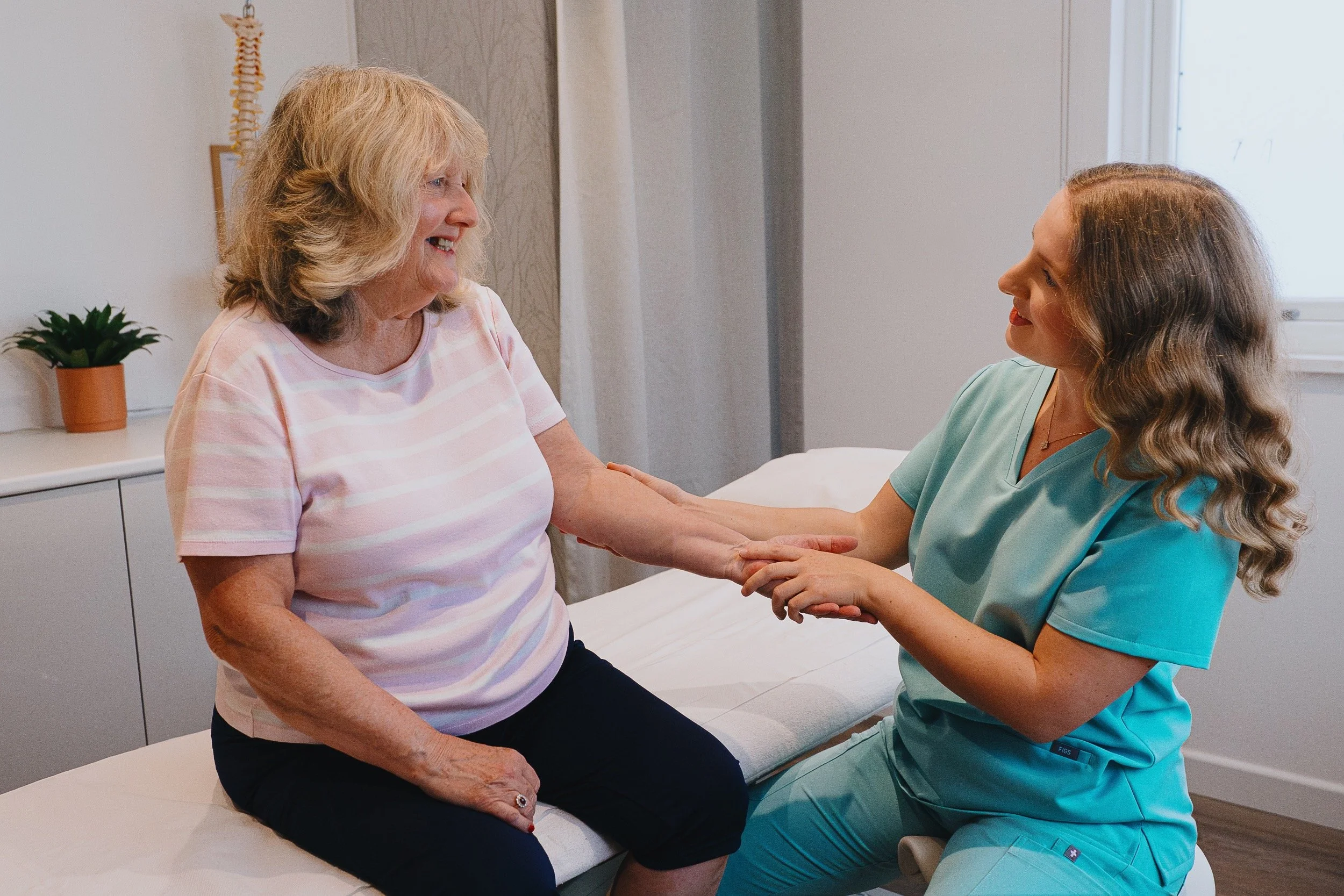
More than just applying hands-on therapy, Osteopaths are highly trained professionals who aim to care for the whole-person within the context of their life. In my practice I take the time to listen to you and understand your concerns, so that you receive targeted treatment intended to guide your body towards health and repair.
There are Multiple Benefits of Adult Osteopathy
-

Targeted pain relief and preventative care for the future
-
We take the time to listen to and understand your body
-
Improved function and mobility which can increase quality of life
-

Receive a diagnosis, so you can understand and better care for your health
-

An intuitive, non-invasive and drug free approach to health and wellbeing
Who is Osteopathy suitable for?
Osteopathy is suitable for all individuals, from newborns to seniors, and welcomes patients from all walks of life. Treatment is always tailored to the individual, taking into consideration their past medical history, current health and individual circumstances.
Osteopathic treatment can be applied to people of all ages and backgrounds. This is because Osteopathy is interested in providing holistic care to its patients, rather than treating ‘disease’ in isolation of the person experiencing it.
The youngest patient I have seen in practice was only 6 days old and the oldest was 95 years; this shows the breadth and depth of care that Osteopathy can provide.
How does Osteopathy work?
Osteopathy works by addressing and treating the root cause of a patient’s concern, rather than their symptoms where possible. In this way we can help to manage and improve a patient's symptomology, while preventing them from reoccurring in the future.
Understanding what may be contributing to your symptoms, be it your physical, mental or emotional wellbeing is a key component of the care that Osteopathy provides. Should we also feel that conventional care is necessary for you, we are able to make referrals to the appropriate healthcare provider.
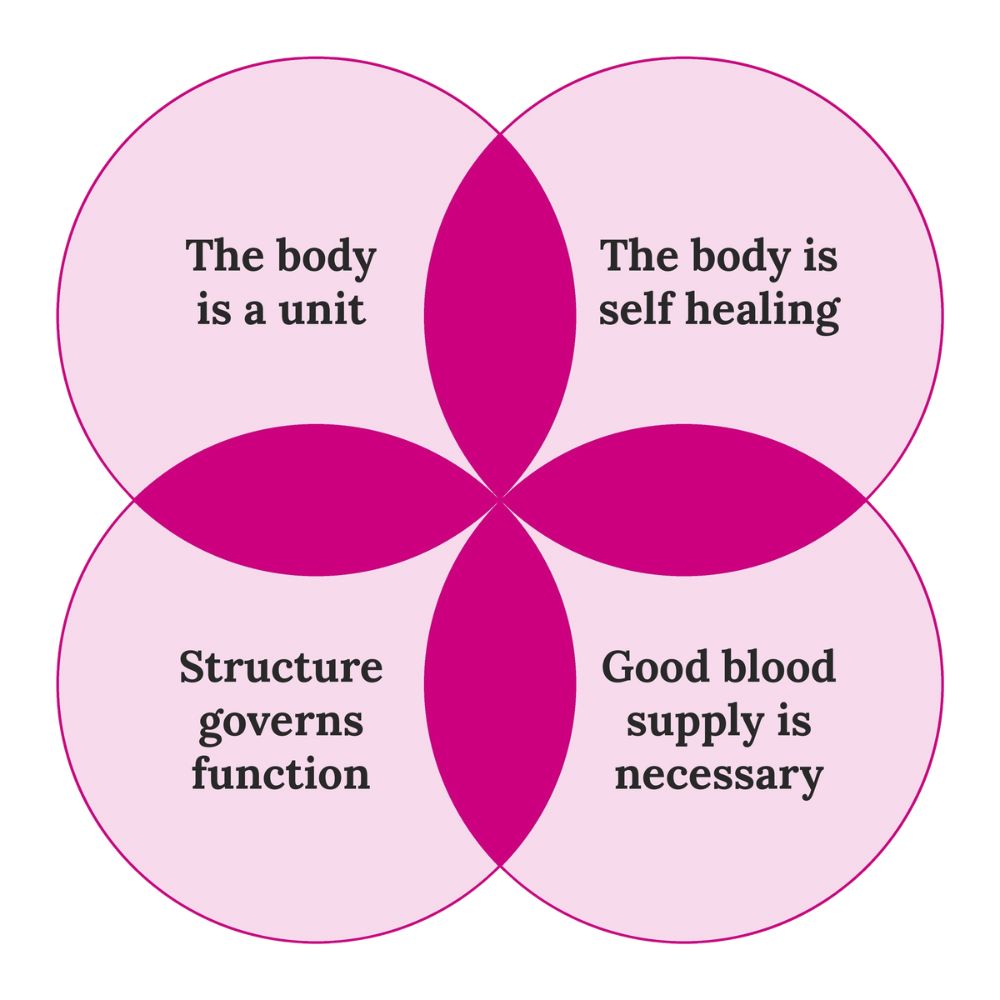
Working under the framework of the four Osteopathic Principles, I ensure every patient receives treatment which is tailored to them, so they can experience better health and an improved quality of life.

-
The type of headache (cervicogenic, tension, chronic etc.) or migraine symptomology varies between patients. Osteopathy aims to address any other musculoskeletal causes which could be affecting the frequency and severity of your headaches.
-
Patients can present with back or neck pain for any number or reasons; overdoing physical activity or being involved in an accident such as a road traffic collision. Our job is to provide you with relief and assist your body to restore function.
-
Emotional stress often shows up as physical pain, for example tight shoulders, a clenched jaw or restricted breathing. Osteopathy aims to ease this muscular tension by supporting your body to settle into a calmer, more relaxed state.
-
Stiffness and reduced range of movement can develop gradually through age, lifestyle, or as a result of previous injury. Our job is to assess where movement is restricted so we may restore mobility and improve function.
-
Symptoms such as shooting pain, tingling or numbness can occur when a nerve becomes irritated or compressed. Osteopathy aims to reduce the muscular and/or joint restrictions which may be contributing to this irritation in order to help resolve this concern.
Areas That We Can Treat
-
Pain in this area can arise from joint stiffness, muscular imbalance or the way the lower back and pelvis are working together. Treatment aims to ease these contributing factors and help you move more comfortably in everyday life.
-
Pain in the shoulder or arm can stem from the joint itself, or from the neck and upper back which influence how the shoulder moves. Osteopathy aims to identify the underlying structure/s which may be the cause and help restore pain-free movement and function.
-
Discs can become irritated through excessive lifting, prolonged sitting or general wear and tear, leading to localised or referred pain. Osteopathy aims to reduce the strain on the surrounding muscles and joints to support your body's natural recovery.
-
Arthritis and joint pain can affect all people, especially seniors and can vary greatly in severity. While osteopathy cannot reverse arthritic change, it aims to ease stiffness, reduce muscular tension and help you stay active and pain free.
-
Whatever your level of activity, injuries can occur through overuse, poor technique, inadequate recovery or a sudden impact. Our job is to treat the injury, identify any contributing factors and support a safe return to your sport or activity.
-
Strains, tears and overuse injuries can occur through sport, work or everyday activities. Osteopathy aims to support the healing process, restore normal movement and reduce the likelihood of re-injury.
-
Hormonal and postural changes during pregnancy can place extra strain on the lower back, pelvis and hips. Osteopathy offers gentle, tailored treatment to help ease discomfort and support your body as it adapts during this time.
-
Pain in the lower limb can be caused by injury and overuse or may be caused by how the hips, pelvis and back move as a unit. Osteopathy aims to address both the local area and any contributing factors throughout the whole body.
-
The type of scoliosis varies from person to person and is often present without causing any problems. Osteopathy cannot always change the curve itself (this depends on the type of scoliosis present), but aims to help manage any associated stiffness and discomfort.
-
Repetitive tasks and prolonged postures, such as desk work, manual labour or playing an instrument, can overload particular muscles and joints over time. Osteopathy aims to ease the strain and provide advice to help reduce the likelihood of symptoms returning.
What to expect from your Osteopath
In my practice each patient receives a detailed initial consultation where we discuss your symptoms, your relevant medical history and what you would like to achieve. I will then conduct a thorough examination of the appropriate joints, muscles and tissues in order to provide you with an explanation as to what I believe to be the underlying cause.
After assessing and observing the subtle changes in your body’s structure and function, I will explain the intention and apply non-invasive Osteopathic techniques with the aim of guiding your body back to health. Where appropriate I may also suggest potential lifestyle changes that could be helpful to your greater wellbeing, while providing stretching or exercise advice tailored to your ability and desired outcome.

An introduction to Cranial Osteopathy
Cranial Osteopathy uses a subtle and highly refined sense of touch with the intention of ‘listening to’ and acknowledging how your body expresses health and function. It is not different to Osteopathy, ‘Cranial Osteopathy’ is purely the name given to this refined approach.
Despite its name; Cranial coming from the word Cranium which translates to head in Latin, this Osteopathic technique was developed to be used throughout the whole body, not just the head and neck. William Sutherland, who developed these techniques nearly 100 years ago, did so following intense anatomical study of the head (cranium) and its component parts. The use of the word ‘Cranial’ is more of a nod therefore, towards how these Osteopathic techniques were first developed rather than about where they are applied.
Clinical experience has shown me how integrating this Osteopathic approach into practice often leads to improved patient satisfaction. I believe this is because Cranial Osteopathy can often provide an insight into the patient’s health and wellbeing that other techniques cannot. In doing so, I am better guided and equipped to treat the areas or aspects of your body that could benefit most from Osteopathic treatment.
The history and principles of Osteopathic Medicine
Osteopathy was developed in the late 19th century, when in 1874, Dr Andrew Taylor Still first described the Osteopathic principles which still underpin Osteopathic practice today.
A.T Still was first to recognise that people should not be ‘reduced’ to the experience of their symptoms, because they have the capacity to find true health within themselves. Osteopaths, therefore, care for the whole-person “believing that the body has an unlimited capacity for repair and regeneration" (- Dr A.T. Still), while recognising that the health and wellbeing of each individual is unique.
The main principles of the practice are:
‘The Body is a Unit’
We cannot separate people into parts; we must look at them as a whole. That means that we must encompass the physical, mental and psychological components of a person, into our diagnostic procedure and treatment.
‘Function and Structure are Inter-related’
One directly affects the other; our job is to establish how this, in relation to your overall health, can be improved or modified.
‘The Body has an Unlimited Capacity to Repair’
This is most important as the body does have its own healing mechanism. Think of how, when you graze your knee or papercut your finger, they heal without intervention. Osteopaths, within the bounds of your medical condition or symptoms, focus on removing any barriers to your health so that your body is free to resolve itself independently.
‘The Rule of the Artery’
Our blood and circulatory system is responsible for delivering all the necessary immune cells and nutrients we need to regenerate and heal. Through our thorough Osteopathic assessments and finely-tuned palpation skills, we can establish how to apply our techniques accordingly to improve blood ‘fluid’ supply and support function.

Frequently Asked Questions
-
No, you are welcome to book directly with me; most of my patients self-refer without seeing their GP. Should I feel that conventional care is necessary for you, I can refer you to the appropriate healthcare provider.
I do not use forceful techniques on babies or children, and if I feel your child would be better supported by another healthcare professional, I will always tell you.
-
Your first appointment lasts 50 minutes, so there is time to discuss your concerns, assess and provide treatment. Follow-up appointments are usually 30 minutes.
-
Please wear something comfortable that you can move easily in, such as gym wear or loose-fitting clothing. You may be asked to remove some clothing so I can examine the area of concern. You will always be given privacy to change, and you are welcome to keep items of clothing on if you prefer.
-
No it should not. Treatment is non-invasive, and I work within your comfort levels at all times. You may feel some pressure or tenderness in a sore area, but please tell me if anything doesn't feel comfortable and I will adjust my approach.
-
Not necessarily. Many of my techniques are gentle and involve no clicking or cracking at all. If a joint technique would help, I will explain it and ask for your agreement first.
-
Osteopathy is a safe, non-invasive and drug-free approach when carried out by a registered practitioner. I take a thorough case history and carry out a careful examination so I only use techniques appropriate for you. Some people experience mild soreness or tiredness afterwards, and I will discuss any relevant risks with you before treatment begins.
-
Yes, in most cases. Osteopathy welcomes patients regardless of their medical history, and I always work within the bounds of your condition. Please let me know about any conditions or medications at your first appointment, and where appropriate I may liaise with your GP or specialist.
-
Initial consultation: £70
Follow-up appointment: £60
Currently I do not accept private health insurance, however I am happy to provide a receipt for you to claim with your insurance company.
Client Testimonials